6 min read
B12 Injections vs. Pills: Finding the Right Fit
A vitamin B12 tablet beside your morning coffee. A quick appointment for a B12 shot. Both can be part of a wellness routine, but the choice isn’t only about needles versus pills. It’s about how your body absorbs B12, whether you’re addressing a medical deficiency, and which approach works for your day-to-day life.
B12 supports healthy red blood cells, nerve function and normal energy metabolism. Some people are able to meet their needs through food or a daily supplement; others need a different route because absorption is difficult. Here’s a practical way to understand the options.
Two paths for the same essential vitamin
The daily tablet: through the digestive tract
B12 is found naturally in meat, fish, eggs and dairy, and it’s also available in fortified foods and supplements. In the digestive tract, B12 normally binds to a protein called intrinsic factor and is absorbed in the last part of the small intestine. Absorption varies with dose and the person’s digestive health.
High-dose tablets can still be useful when absorption is limited. At a 1,000-microgram oral dose, research cited by the NIH estimates that roughly 1.3% is absorbed. That is a small percentage but still more than the 2.4 micrograms most adults need each day. Some B12 is absorbed without intrinsic factor, too.
The injection: from muscle into circulation
An intramuscular, or IM, B12 shot places the vitamin in muscle tissue, from which it is absorbed into the bloodstream. That route bypasses the stomach and intestines, so it doesn’t depend on digestive absorption. This distinction can be especially important when a medical condition interferes with the usual oral pathway.
B12 Delivery Pathways: Oral vs. Intramuscular
Understanding digestive breakdown versus direct muscular absorption
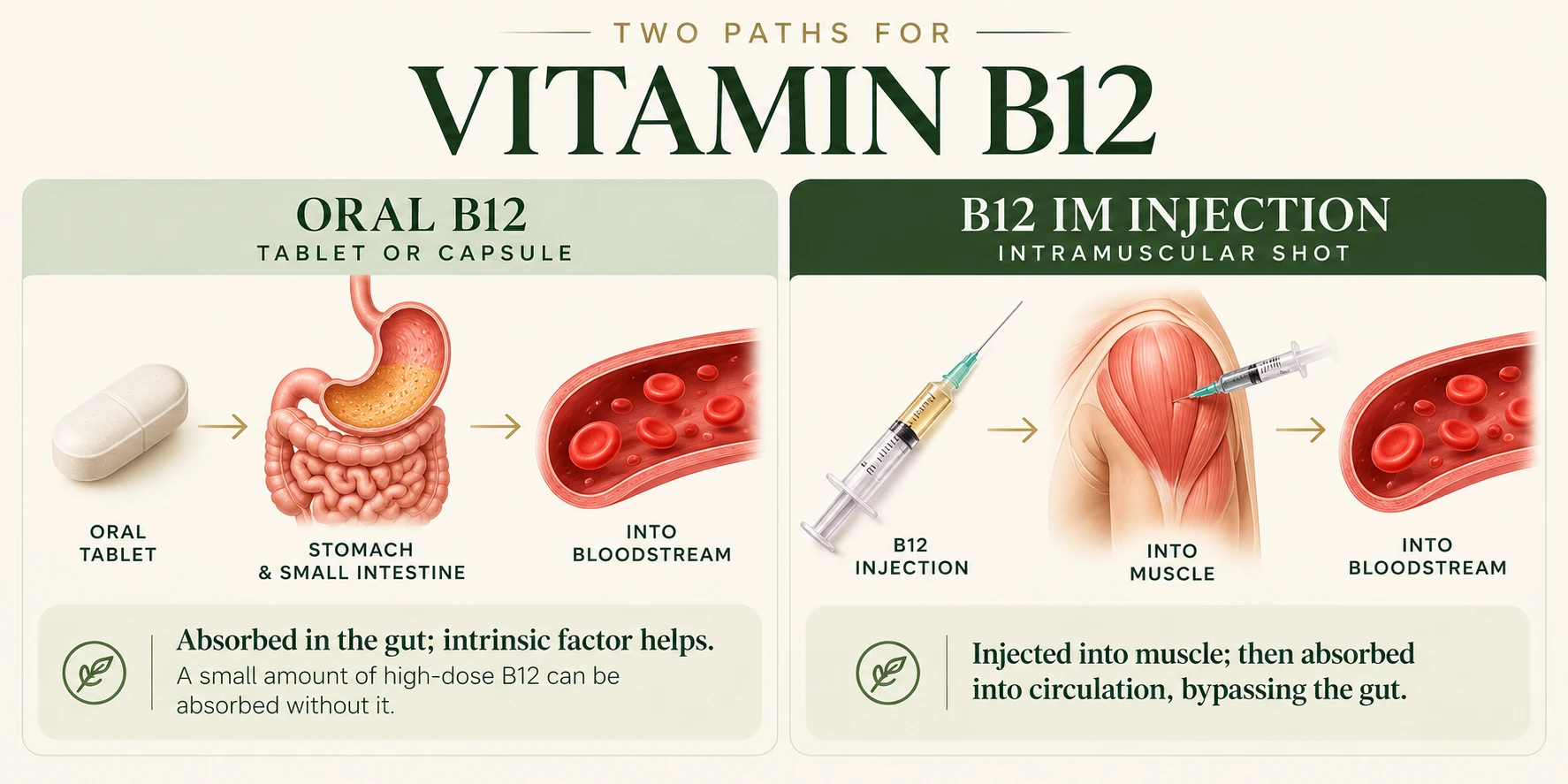
Figure 1. B12 tablets use the digestive pathway; intramuscular injections bypass the gut and are absorbed from muscle into circulation.
At a Glance: B12 Pills vs. Injections
| Feature | Oral B12 (Pills / Tablets) | Intramuscular B12 (Injections) |
|---|---|---|
| Absorption Route | Digestive tract via intrinsic factor in the terminal ileum | Bypasses digestion; absorbed directly from muscle tissue into circulation |
| Absorption Rate | ~1.3% passive absorption at 1,000 mcg high oral doses | Direct systemic delivery with rapid circulating bioavailability |
| Convenience & Routine | Daily morning routine at home; portable and simple | Brief clinic visit; ideal for those who prefer not to take daily pills |
| Clinical Malabsorption | May require very high doses; limited in severe gut disorders | Gold-standard recommendation for pernicious anemia & stomach surgeries |
| Onset of Replenishment | Gradual accumulation over weeks to months | Immediate tissue availability and swift cellular uptake |
Three situations, three ways to think about B12
1. Your goal is an easy daily routine
If you eat few animal foods, prefer a supplement at home or are maintaining adequate intake, a tablet may be a convenient choice. Vegetarians, vegans and people who don’t regularly eat B12-fortified foods may particularly benefit from discussing their intake with a clinician. Daily supplements are simple, portable and widely available.
2. Your body has trouble absorbing B12
An injection may be more appropriate when the gut can’t reliably absorb B12. NICE guidance recommends lifelong intramuscular replacement for deficiency caused by autoimmune gastritis and for certain major stomach or intestinal surgeries. In other absorption conditions, a clinician weighs injections against high-dose oral treatment and follows the response. People with neurological symptoms need timely medical assessment rather than choosing a wellness dose on their own.
3. You prefer a brief clinic visit
Not every B12 conversation begins with a diagnosis. Some people simply like the convenience of an appointment rather than another daily item to remember. An elective B12 shot can fit into a personal wellness routine. If B12 is being used to treat a diagnosed deficiency, the replacement approach is guided by that person’s medical needs.
The research behind pills and injections
A 2018 Cochrane review looked at three randomized trials involving 153 people with B12 deficiency. High-dose oral B12—generally 1,000 to 2,000 micrograms daily—raised blood B12 levels to a similar extent as injections in these small studies. The reviewers rated the evidence low quality, and the trials did not establish whether one route improved symptoms or quality of life more than the other.
That is why the cause of low B12 is as important as the format. NICE recommends considering oral replacement first for deficiency caused by diet. For medicine-related deficiency, such as cases associated with metformin or acid-reducing medicines, either route may be appropriate depending on clinical judgment and preference. For some absorption problems, IM treatment is preferred. There is no single best route for everyone.
Start with what your body is telling you
B12 deficiency can develop gradually because the body stores this vitamin for years. Possible clues include unusual tiredness, numbness or pins and needles, balance changes, difficulty concentrating and a sore tongue. These symptoms can have other causes, so fatigue by itself doesn’t diagnose a deficiency. Nerve-related symptoms can also occur without anemia.
Factors associated with low B12 include older age, certain digestive conditions or surgeries, diets with few B12-containing foods, and long-term use of medications such as metformin. Unexplained fatigue, new numbness or balance changes can have several possible causes and deserve appropriate medical attention. These concerns are separate from choosing an elective B12 wellness shot.
Women’s wellness: B12 and iron play different roles
Fatigue around a menstrual cycle can have many explanations. Vitamin B12 supports red blood cell formation, nerve function, and normal energy metabolism. Iron helps the body make hemoglobin, which carries oxygen. Heavy menstrual bleeding can lower iron stores over time; monthly bleeding itself is not a typical cause of low B12. B12 status is more often influenced by diet, certain medications, or difficulty absorbing the vitamin.
Both low iron and low B12 can contribute to fatigue or anemia, but they are different nutrients with different roles. A B12 injection does not replace iron when iron stores are low. Anyone experiencing persistent fatigue or unusually heavy menstrual bleeding should discuss those symptoms with a healthcare professional. For women interested in incorporating B12 into a wellness routine, Ivy Lounge offers a convenient intramuscular shot.
A word about energy and timing
Because B12 participates in normal energy metabolism, it’s easy to assume that more always means more energy. What the evidence supports is more specific: correcting a B12 deficiency can help fatigue caused by that deficiency. For people whose levels are already sufficient, extra B12 hasn’t been shown to provide an added energy or athletic-performance boost.
When a deficiency is treated, improvements may begin within about two weeks, according to NICE, but can take up to three months or longer depending on the symptom. The form and schedule of replacement are individualized. B12 has no established upper intake limit because toxicity is low, but people with a known cobalt allergy should discuss B12 products with a clinician.
The Ivy Lounge approach: simple, personal and comfortable
At The Ivy Lounge Wellness in Irving, Main Character Energy is our intramuscular vitamin B12 shot, made with cyanocobalamin. The appointment is designed to be comfortable, simple and easy to fit into your wellness routine. Before receiving the injection, guests complete our health and consent forms and disclose any known medical conditions or deficiencies. Our licensed clinical team administers the shot in our welcoming lounge. Find it on our IM Shots & Boosters menu.
Whether you prefer an injection to a daily supplement or simply want to include B12 in your wellness routine, we’re here to make the experience easy and enjoyable. Our team can answer practical questions about the appointment and help you feel comfortable during your visit.
The right fit is the one that fits you
Tablets and injections deliver the same essential nutrient by different routes. Tablets suit many everyday routines, while injections bypass digestion and can be a valuable choice for specific medical needs or individual preferences. Understanding the difference lets you make a more informed decision without turning wellness into a one-size-fits-all formula.
Explore our IM Shots & Boosters or book your Main Character Energy appointment at The Ivy Lounge Wellness.
Frequently Asked Questions
How quickly can I feel the effects of a B12 injection?
Because intramuscular injections bypass digestive breakdown and enter circulation directly, absorption is rapid. In clinical deficiency settings, symptom improvements often begin within two weeks according to NICE guidelines, though complete cellular replenishment can take several weeks or months depending on the individual.
Will extra B12 give me a sudden energy boost if my levels are normal?
Evidence shows that correcting a B12 deficiency can relieve fatigue caused by that deficiency. However, in individuals who already have sufficient circulating B12, excess amounts haven’t been shown to provide an artificial stimulant or athletic boost, as B12 is water-soluble and excess amounts are naturally excreted.
Can a B12 injection help with fatigue caused by low iron or heavy periods?
No. Vitamin B12 and iron are distinct micronutrients with different physiological roles. Heavy menstrual bleeding primarily depletes iron stores. A B12 injection does not replace iron. Anyone experiencing persistent fatigue or heavy bleeding should receive a clinical evaluation to check both iron and B12 levels.
What form of vitamin B12 does The Ivy Lounge Wellness administer?
Our Main Character Energy intramuscular shot is formulated with medical-grade cyanocobalamin, administered by our licensed clinical team in our relaxing Irving lounge following a health history and vital signs screening.
The Bottom Line
- B12 tablets and intramuscular injections provide the same essential vitamin through different physiological routes.
- Daily pills are effective and convenient for everyday nutritional support when digestive absorption is intact.
- Injections bypass the digestive tract entirely, making them valuable for individuals with malabsorption conditions, pernicious anemia, or those who prefer clinic visits over daily pills.
- B12 supports natural cellular energy and red blood cell formation, but it is not a substitute for iron or medical evaluation of persistent fatigue.
References
- NIH Office of Dietary Supplements. Vitamin B12: Fact Sheet for Health Professionals. Updated July 2, 2025. https://ods.od.nih.gov/factsheets/VitaminB12-HealthProfessional/
- National Institute for Health and Care Excellence. Vitamin B12 deficiency in over 16s: diagnosis and management (NG239). Published March 6, 2024. https://www.nice.org.uk/guidance/ng239
- National Institute for Health and Care Excellence. NG239 recommendations. https://www.nice.org.uk/guidance/ng239/chapter/recommendations
- Wang H, Li L, Qin LL, Song Y, Vidal-Alaball J, Liu TH. Oral vitamin B12 versus intramuscular vitamin B12 for vitamin B12 deficiency. Cochrane Database of Systematic Reviews. 2018;(3):CD004655. doi:10.1002/14651858.CD004655.pub3. https://www.cochrane.org/evidence/CD004655_oral-vitamin-b12-compared-intramuscular-vitamin-b12-vitamin-b12-deficiency
- NICE. Visual summary: ongoing care and follow-up for vitamin B12 replacement. https://www.nice.org.uk/guidance/ng239/resources/visual-summary-ongoing-care-and-followup-for-vitamin-b12-replacement-pdf-13315996909
- National Academies of Sciences, Engineering, and Medicine. Vitamin B12. Dietary Reference Intakes (1998). https://www.ncbi.nlm.nih.gov/books/NBK114302/
- UK Medicines and Healthcare products Regulatory Agency. Vitamin B12 and cobalt allergy: Drug Safety Update. December 18, 2023. https://www.gov.uk/drug-safety-update/vitamin-b12-hydroxocobalamin-cyanocobalamin-advise-patients-with-known-cobalt-allergy-to-be-vigilant-for-sensitivity-reactions
- NIH Office of Dietary Supplements. Iron: Fact Sheet for Health Professionals. https://ods.od.nih.gov/factsheets/Iron-HealthProfessional/
- American College of Obstetricians and Gynecologists. Heavy Menstrual Bleeding. https://www.acog.org/womens-health/faqs/heavy-menstrual-bleeding
Educational disclaimer: This article is for general education and is not a substitute for individualized medical advice, diagnosis or treatment. IV and injectable nutrient services are elective and are not intended to diagnose, treat, cure or prevent any disease. Talk with a qualified healthcare professional about your situation.
Commercial disclosure: The Ivy Lounge Wellness provides the vitamin B12 injection service mentioned in this article.